Launch offer — valid today only

📄 Digital book in PDF · read it on your phone or print it

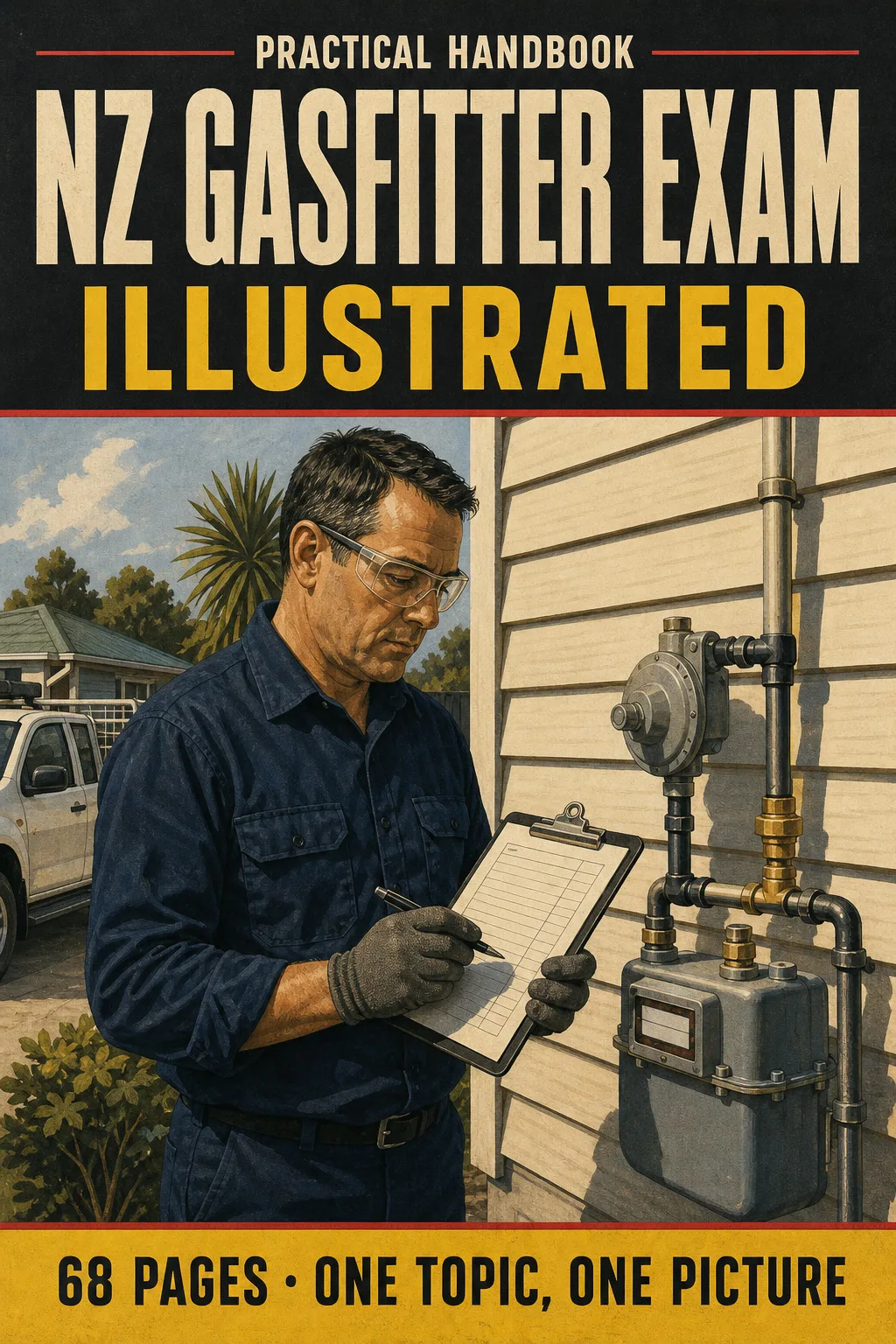
The NZ Gasfitter Exam and AS/NZS 5601.1 in Drawings Read Any Installation Drawing in the Same Order, One Topic per Page

Pipe sizing, pressure testing, purging, flues and terminals, ventilation, LPG cylinders and commissioning. Every topic has its own page: the drawing first, then what you need to remember. 68 illustrated pages.

START REVISING THIS WAY

🔒 Secure checkout · PDF by email · 30-day guarantee

Every topic, its own pageEach installation and procedure drawn, with the explanation beside it
68 illustrated pages9 parts, from the rules and the exam to the final revision checklist
Up-to-date sourcesAS/NZS 5601.1, the Gas (Safety and Measurement) Regulations 2010 and the Board's published exam prescriptions
PDF by emailFormat

Look Inside the Book

Every page has one big drawing and a box with the pressures, distances and steps you need to know:

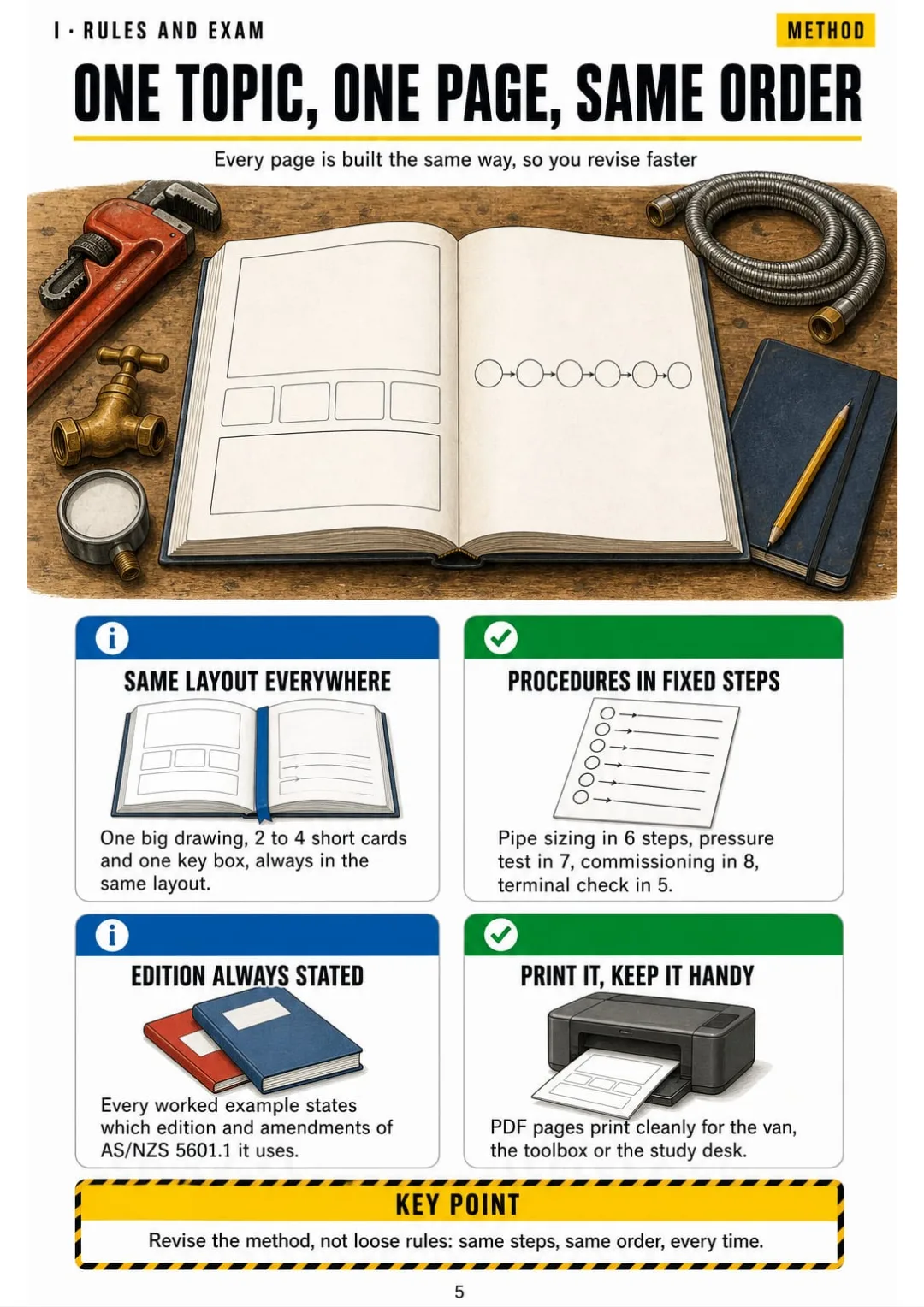
Same layout on every page: one drawing, short cards and one key point to remember
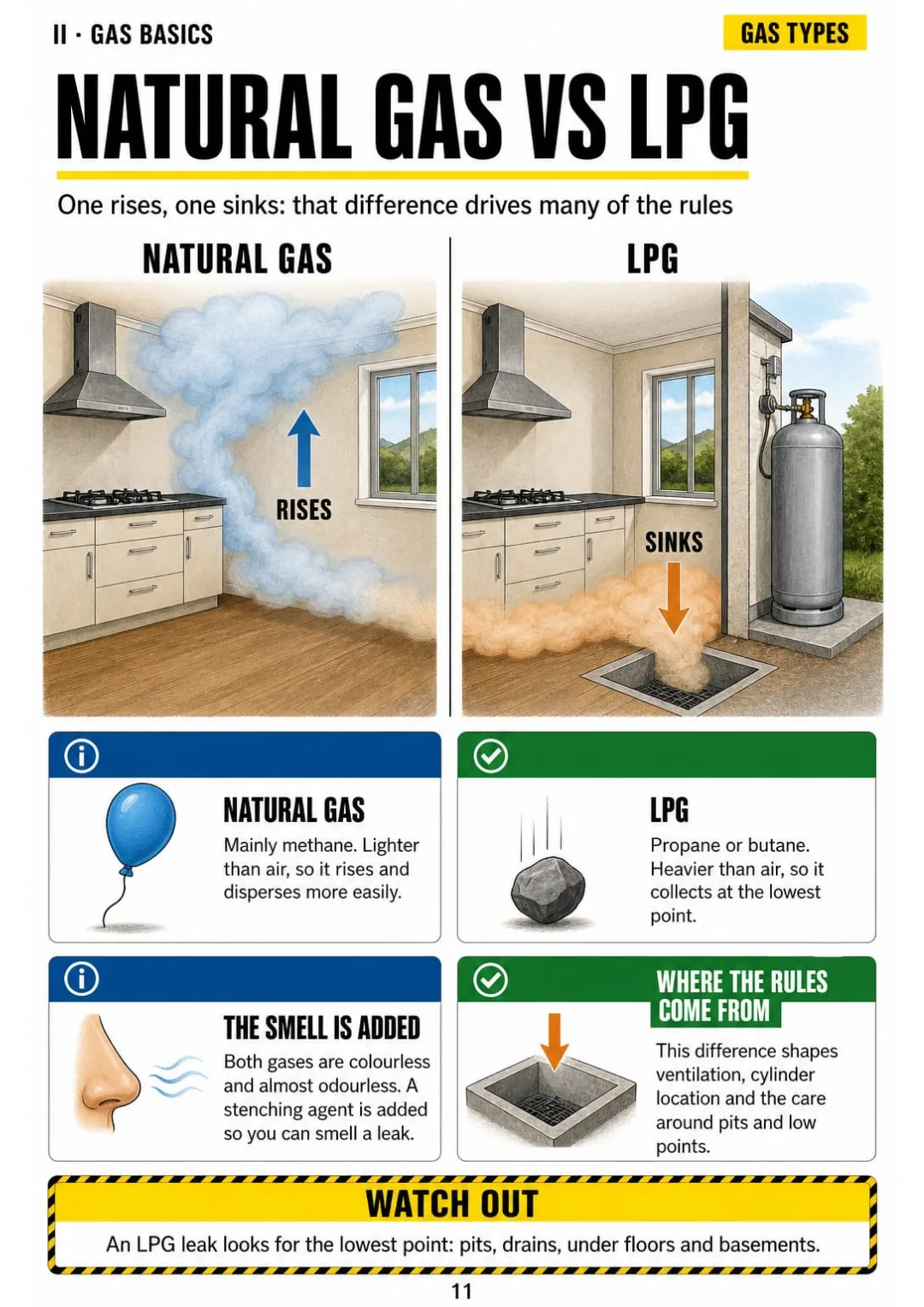
Natural gas is lighter than air; LPG is heavier and pools at the lowest point.
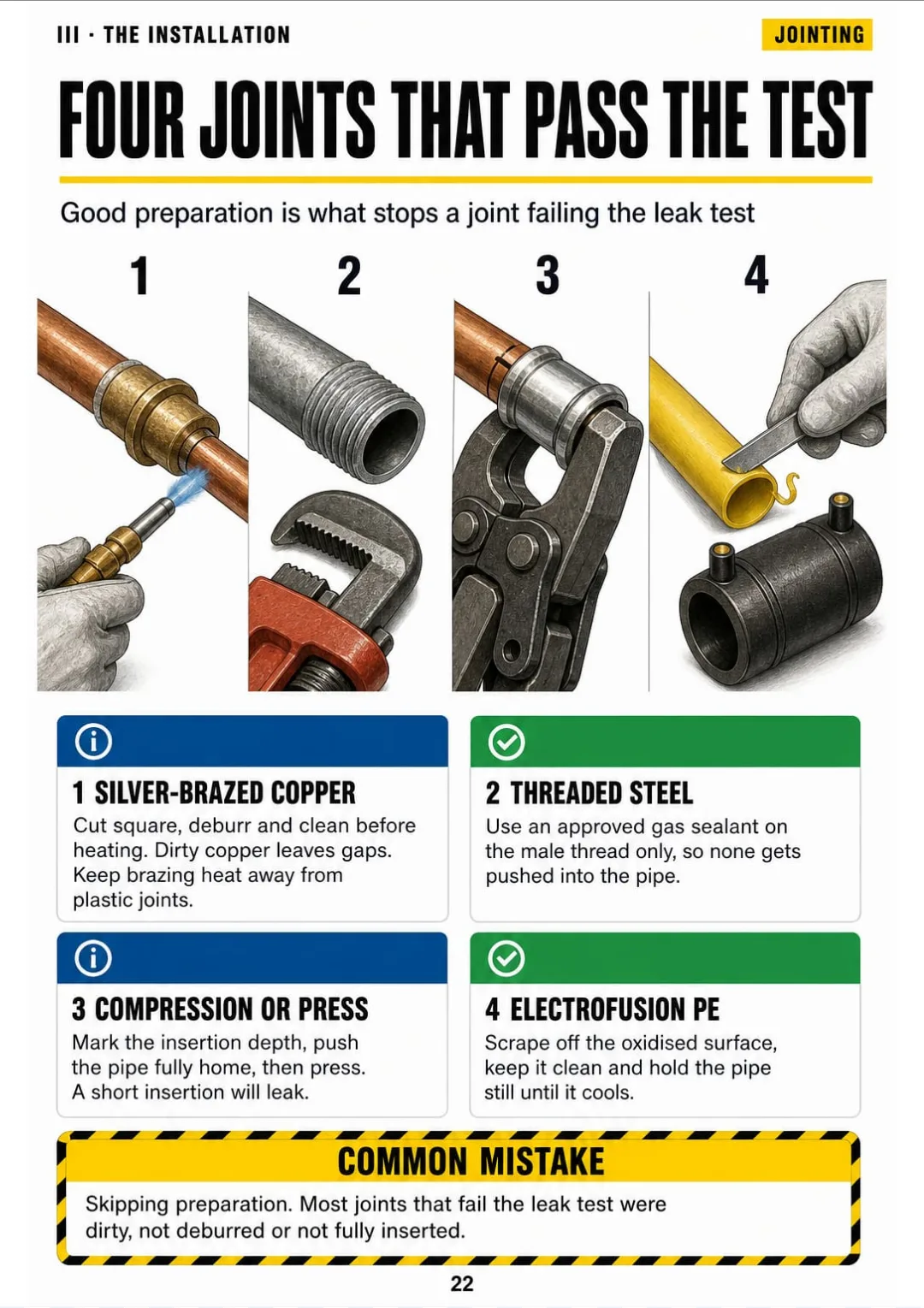
Brazed, threaded, press and electrofusion joints, each with its key prep step
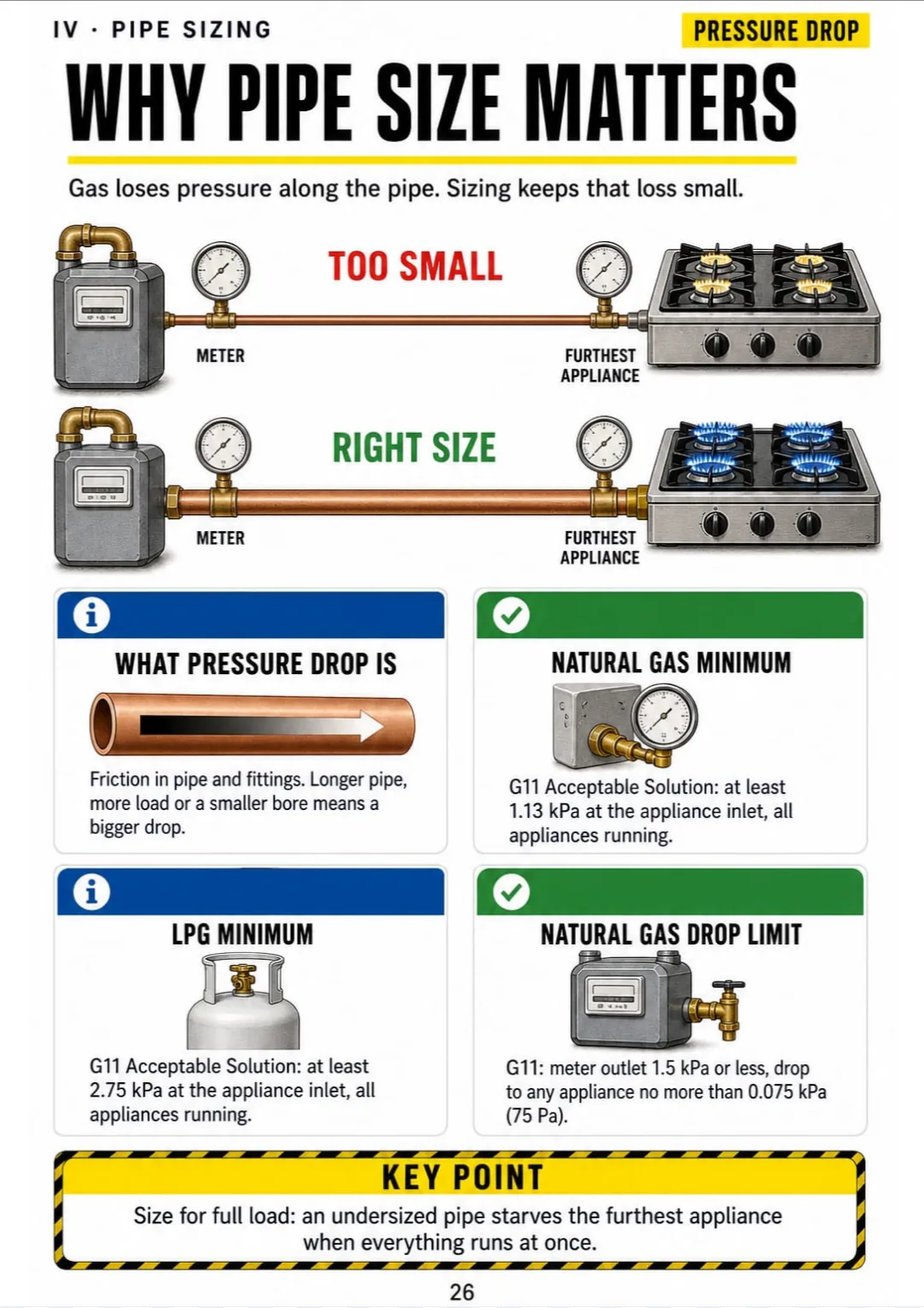
Natural gas: at least 1.13 kPa at the appliance inlet with all appliances on (G11 Acceptable Solution).
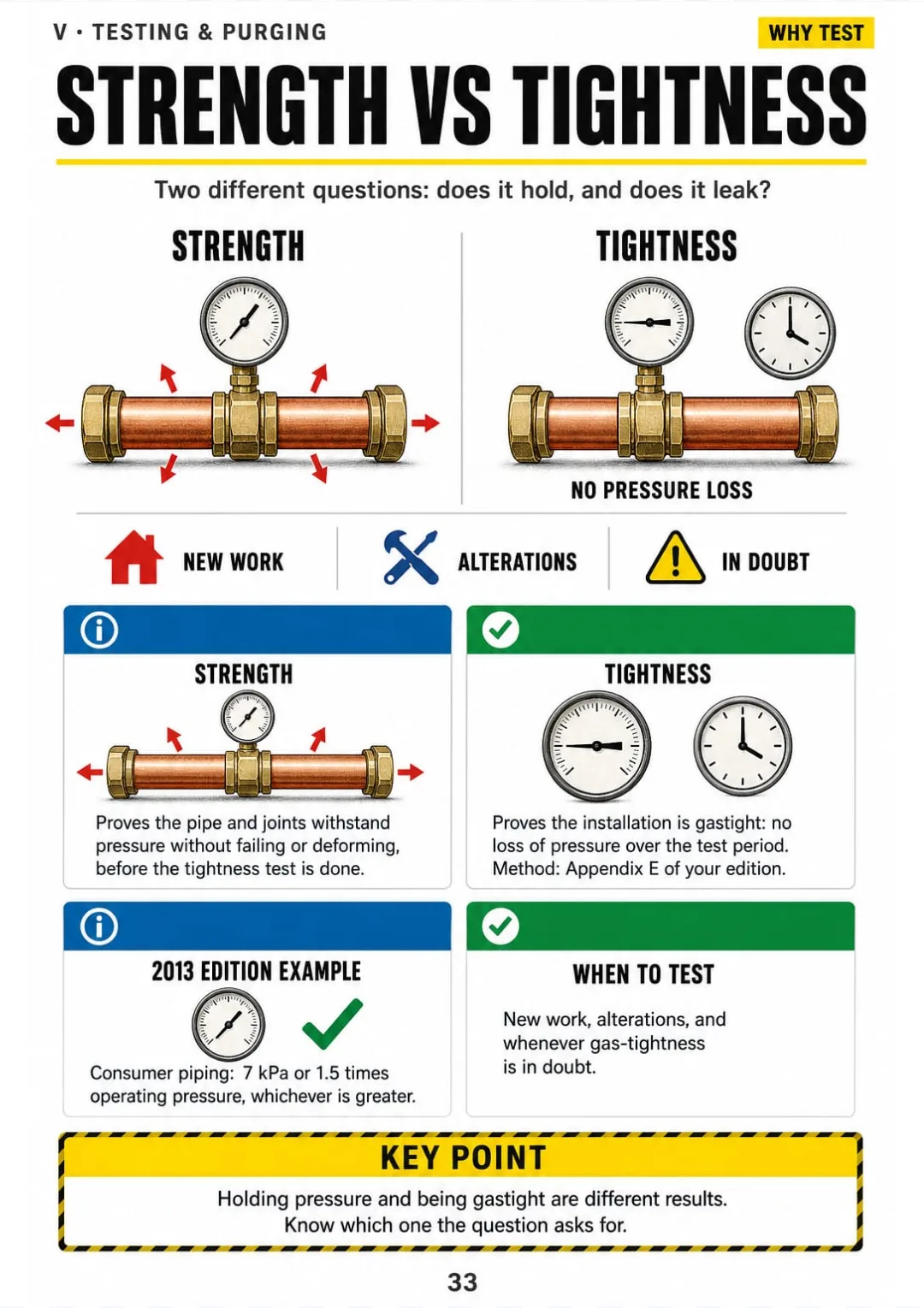
Strength vs tightness: the Appendix E leak test is 7 kPa or 1.5× operating pressure, whichever is greater (2013, Amdt 1–4)
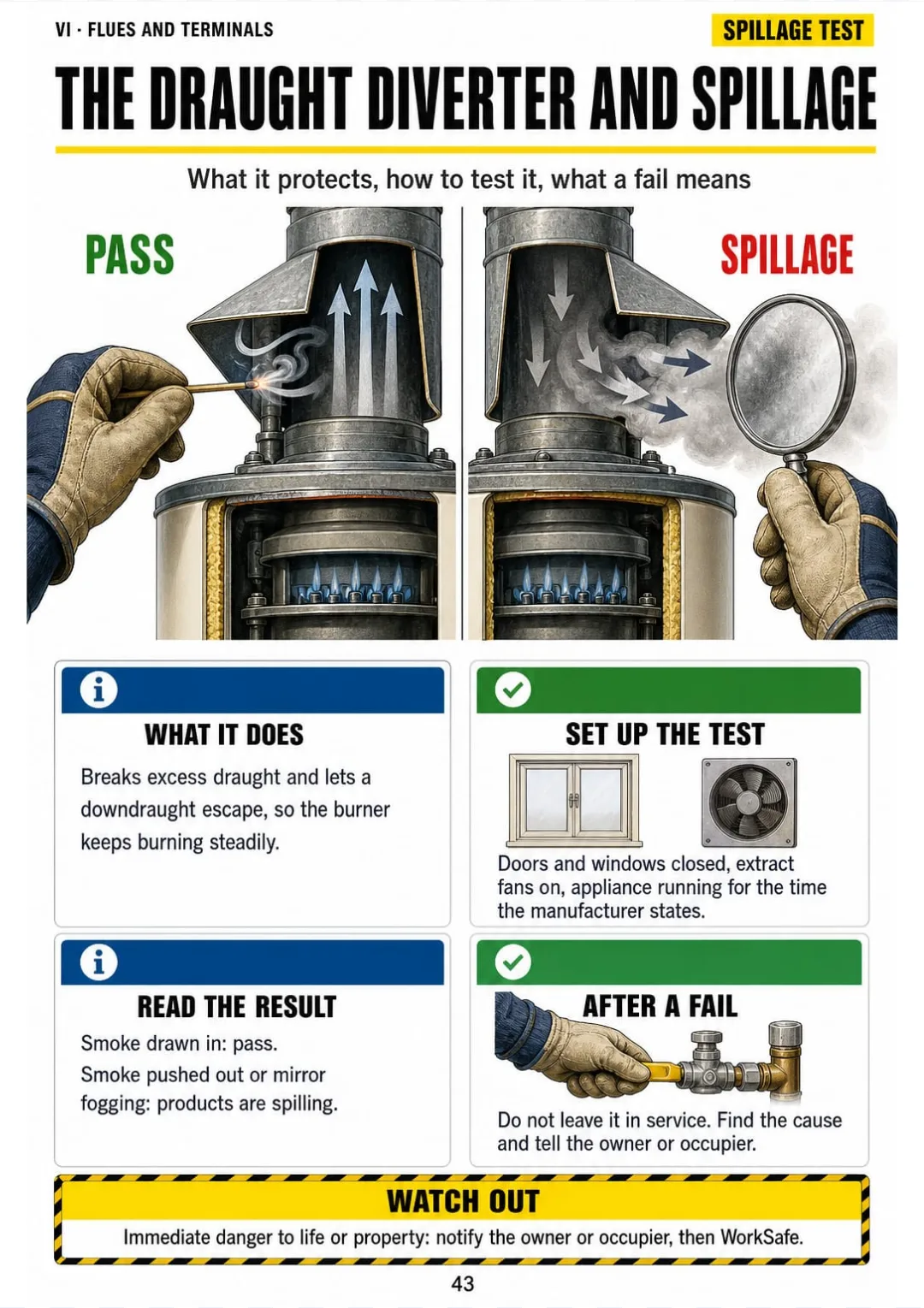
Draught diverter spillage test: smoke drawn in passes, smoke pushed out fails
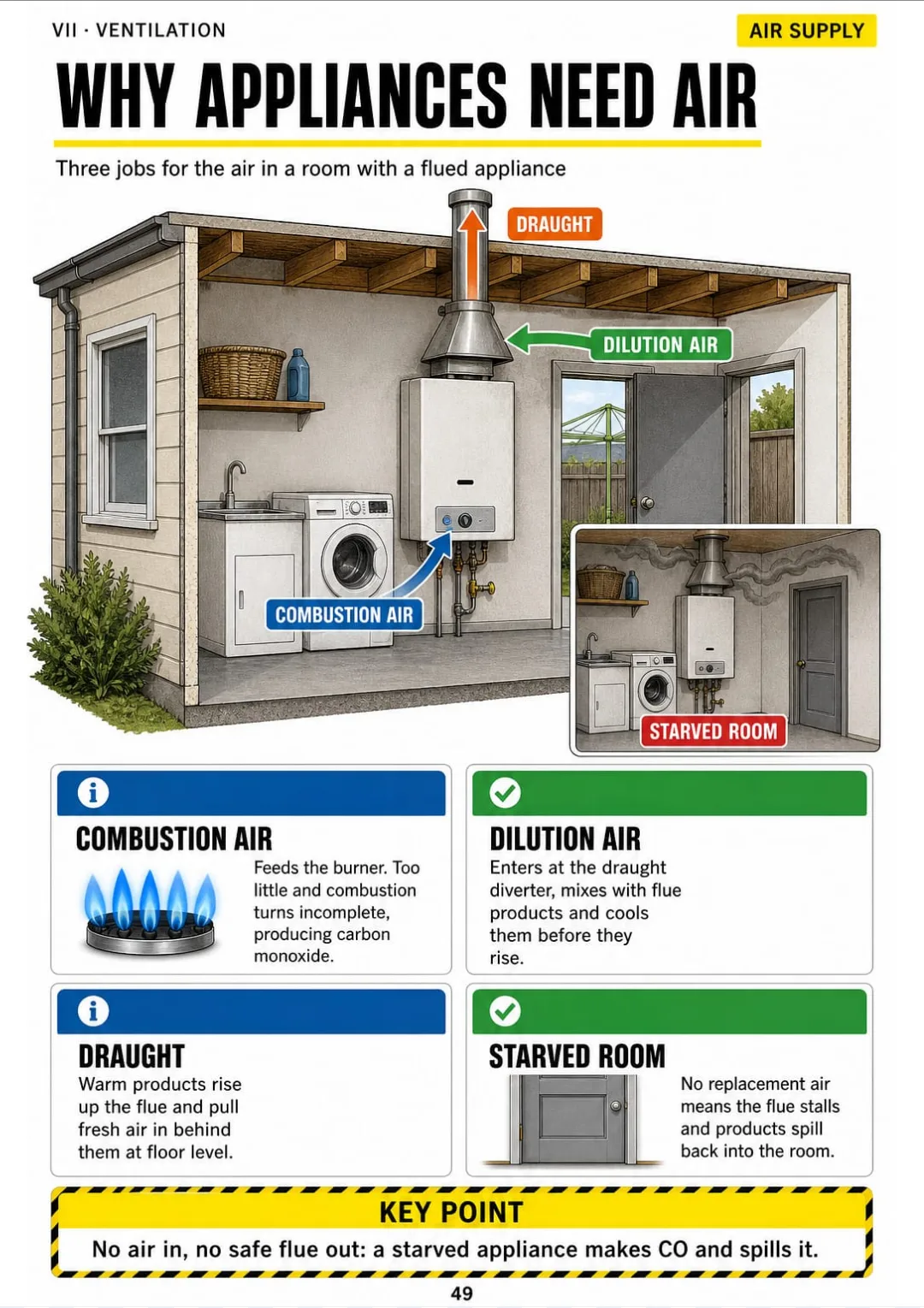
Combustion air, dilution air and draught: one drawing, three jobs, one reason flues spill.
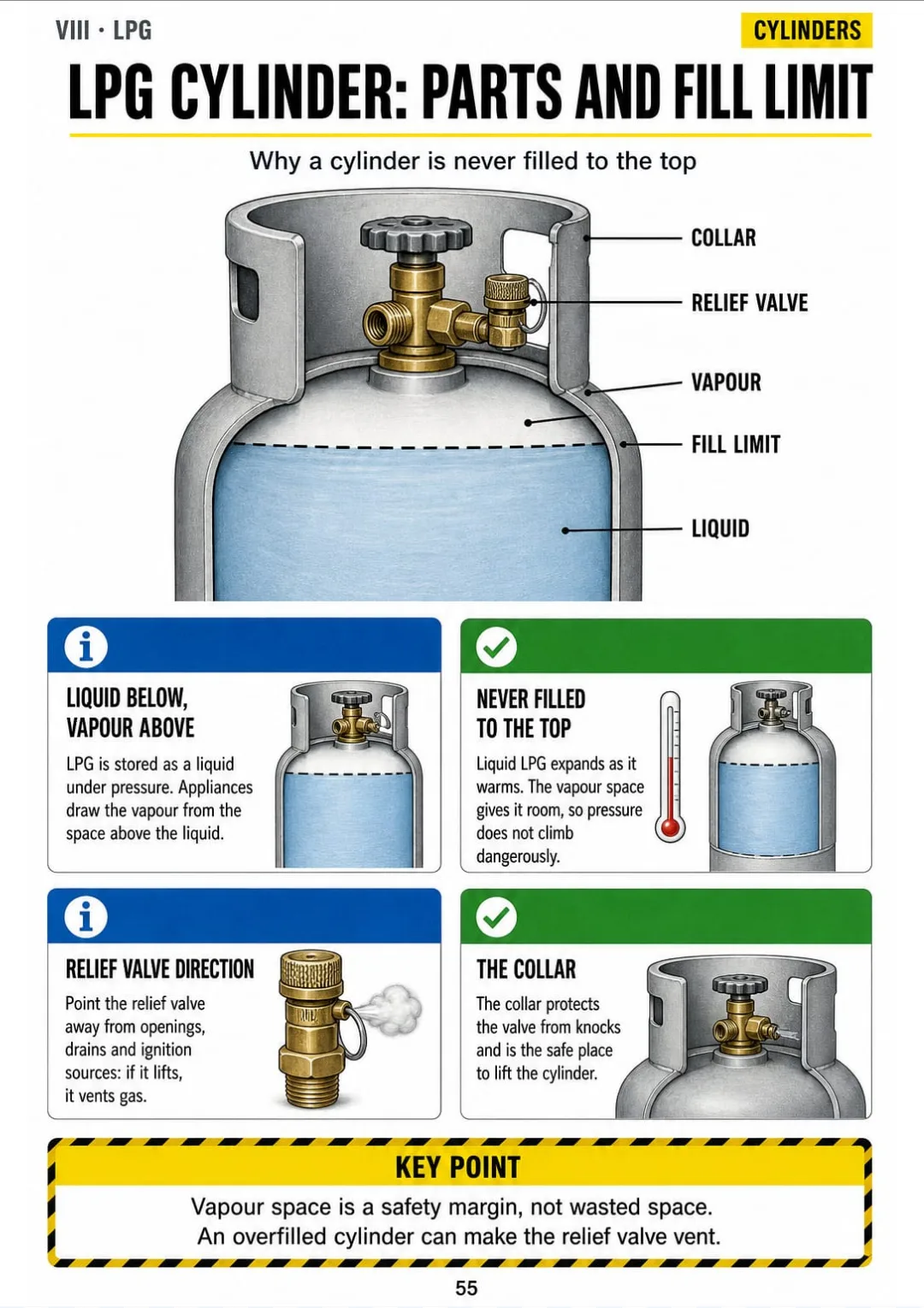
Valve, relief valve, collar and vapour space: why LPG cylinders are never filled full

Swipe to see more →

These are real pages from the book. The table of contents is the full one: 9 parts and 64 topics.

The Problem Isn't You. It's How It Was Explained to You.

You're in the exam looking at a drawing of a house supply: service pipe, regulator, meter, a run of pipe to three appliances. The question asks where the point of supply is, and you've connected dozens of these, but on paper you can't place it.

You know the job. But the Standard spreads the installation across pages of definitions and clauses, and nobody ever showed you the whole thing in one picture.

Brazed, threaded, press and electrofusion joints, each with its key prep step

In this book, that same installation is one page: service pipe, regulator, meter, consumer piping, isolation valve and appliance, drawn left to right, with the point of supply marked where it belongs.

Pipe sizing, the pressure test, flue terminals, ventilation openings and LPG cylinder location get the same treatment: each one on its own page, drawn the same way.

You look at the exam drawing, you recognise the order, and you know what you're looking for and where it sits.

COMPARE FOR YOURSELF

The Same Topic, Two Ways to Study It

THIS
  • The manual: line after line of clauses
  • Natural gas and LPG explained only in words
  • You walk into the exam with doubts
Natural gas, consisting predominantly of methane, possesses a relative density lower than that of air and will therefore tend to rise and disperse when released within an enclosed space, whereas liquefied petroleum gas, comprising propane, butane or mixtures thereof, possesses a relative density greater than that of air and will accumulate at low level, including in pits, drains and underfloor cavities. Consequently, requirements for the location of cylinders, regulators and appliances, the provision of ventilation and the conversion of appliances between gas types differ and shall be determined with reference to the applicable clauses.
FOR THIS
  • Natural gas and LPG side by side in one drawing
  • The key numbers in a box
  • Pits, drains and underfloor spaces marked where LPG collects
Natural gas is lighter than air; LPG is heavier and pools at the lowest point.
CONTENTS

Take a Look at the 9 Parts and 64 Topics

The rules and the exam, gas basics, the installation, pipe sizing, pressure testing and purging, flues and terminals, ventilation, LPG and commissioning: 68 pages, all illustrated.

IThe Rules and the Exam · pp. 5-10
  1. How to Use This Book: One Topic, One Page, Same Order
  2. Who Does What: Trainee, Gasfitter, Certifying Gasfitter
  3. The Paperwork Pyramid: Act, Regulations, Standard
  4. Low-Risk, General and High-Risk Gasfitting
  5. How AS/NZS 5601.1 Is Organised
  6. Inside the Two Exams: What Each One Tests
IIGas Basics That Explain Everything · pp. 11-17
  1. Natural Gas vs LPG, Side by Side
  2. The Fire Triangle and Flammability Limits
  3. Complete vs Incomplete Combustion
  4. Carbon Monoxide: How It Harms
  5. Pressure Units: kPa, Pa and Gauge Pressure
  6. Heat Input: MJ/h and kW
  7. Specific Gravity and Wobbe Index, Made Simple
IIIThe Installation, From Supply to Appliance · pp. 18-25
  1. The Whole Installation in One Drawing
  2. Meters and the Point of Supply
  3. Regulators: What They Do and Where They Go
  4. Approved Pipe Materials
  5. Joints That Pass Inspection
  6. Isolation Valves: Where You Need One
  7. Pipe Support, Protection and Concealment
  8. Flexible Connections and Appliance Hook-Up
IVPipe Sizing, Step by Step · pp. 26-32
  1. Why Pipe Size Matters: Pressure Drop
  2. The 6-Step Pipe Sizing Method
  3. Step 1-2: Loads and the Sketch
  4. Step 3-4: Longest Run and Fittings Allowance
  5. Step 5-6: Reading the Sizing Table
  6. Worked Example: Natural Gas House
  7. Worked Example: LPG Installation
VPressure Testing and Purging · pp. 33-40
  1. Why We Test: Strength vs Tightness
  2. Your Test Kit
  3. The Pressure Test in 7 Steps
  4. Reading the Gauge: Pass or Fail
  5. Finding a Leak
  6. Testing Existing Installations
  7. Purging: Air Out, Gas In
  8. Purging Large Pipes and Safe Discharge
VIFlues and Terminals · pp. 41-48
  1. How a Flue Works: Draught
  2. Appliance Types: Open-Flued, Room-Sealed, Flueless
  3. The Draught Diverter and Spillage
  4. Flue Materials, Size and Route
  5. Terminals in Elevation: What Is Measured
  6. Terminals in Plan View
  7. Roof Terminals and Cowls
  8. Checking a Terminal in 5 Steps
VIIVentilation and Appliance Location · pp. 49-54
  1. Why Appliances Need Air
  2. High and Low Ventilation Openings
  3. Calculating Ventilation: The Method
  4. Appliances in Enclosures and Cupboards
  5. Rooms Where Appliances Need Care
  6. Extraction Fans and Flued Appliances
VIIILPG Installations · pp. 55-60
  1. LPG Cylinders: Parts and Sizes
  2. Locating Cylinders Safely
  3. Changeover Regulators and Manifolds
  4. LPG Pressures and Two-Stage Regulation
  5. Converting an Appliance Between Gases
  6. LPG in Caravans, Boats and Outdoors
IXCommissioning, Certification and Exam Revision · pp. 61-68
  1. Commissioning in 8 Steps
  2. Setting and Checking Operating Pressure
  3. Safety Devices: Flame Failure, Thermostats, Relief Valves
  4. Gas Safety Certificate and Certificate of Compliance
  5. Unsafe Installations: Disconnect, Label, Report
  6. How to Read the Certifying Exam Diagram Sheet
  7. Exam Day: Calculations Under Time Pressure
  8. Final Revision Checklist

One Page, One Topic, All Clear

Think of it this way:

You've just run new pipe to a cooktop and a water heater, and the gauge goes on for the tightness test. You need the steps in the right order, without guessing.

In the book you open the pressure testing page and see the gauge connected, the section isolated and every step numbered: strength or tightness, test pressure, wait, read, pass or fail.

Strength vs tightness: the Appendix E leak test is 7 kPa or 1.5× operating pressure, whichever is greater (2013, Amdt 1–4)

Same with pipe sizing, flue terminals in plan and elevation, high and low ventilation openings, LPG cylinder location and commissioning: each one has its own page.

NZ Gasfitter Exam Illustrated is 9 parts, 64 topics on 68 illustrated pages, finishing with how to read the certifying exam diagram sheet and a final revision checklist.

What you see drawn, you don't have to memorize.

What's Inside NZ Gasfitter Exam Illustrated:

Ipp. 5-10

The Rules and the Exam

Know what each exam tests and which rules apply to you: trainee vs gasfitter vs certifying gasfitter, the Act, the Regulations and the Standard, and the risk levels of gasfitting.

IIpp. 11-17

Gas Basics That Explain Everything

Natural gas vs LPG, the fire triangle, complete and incomplete combustion, carbon monoxide, kPa and Pa, MJ/h and kW, specific gravity and the Wobbe index.

IIIpp. 18-25

The Installation, From Supply to Appliance

The whole installation in one drawing, meters and the point of supply, regulators, pipe materials, joints, isolation valves, support and concealment, appliance hook-up.

IVpp. 26-32

Pipe Sizing, Step by Step

Size a run without guessing: pressure drop, loads, longest run and fittings allowance, the 6-step method, reading the sizing table and two worked examples, natural gas and LPG.

Vpp. 33-40

Pressure Testing and Purging

The test in the right order, every time: strength vs tightness, the test kit, the pressure test in 7 steps, reading the gauge, finding a leak, existing installations and purging.

VIpp. 41-48

Flues and Terminals

Draught, open-flued, room-sealed and flueless appliances, the draught diverter, flue materials and routes, terminals in elevation and plan, roof terminals and a 5-step terminal check.

VIIpp. 49-54

Ventilation and Appliance Location

Why appliances need air, high and low openings, the ventilation method, enclosures and cupboards, rooms that need care and extraction fans.

VIIIpp. 55-60

LPG Installations

Cylinder parts and sizes, safe cylinder location, changeover regulators, two-stage regulation, converting between gases and LPG in caravans, boats and outdoors.

IXpp. 61-68

Commissioning, Certification and Exam Revision

Commissioning in 8 steps, operating pressure, safety devices, certificates, unsafe installations, the certifying exam diagram sheet, exam-day calculations and the final checklist.

At the end of the book: A page on reading the certifying exam diagram sheet and a final revision checklist.
Plus: 2 Free Books

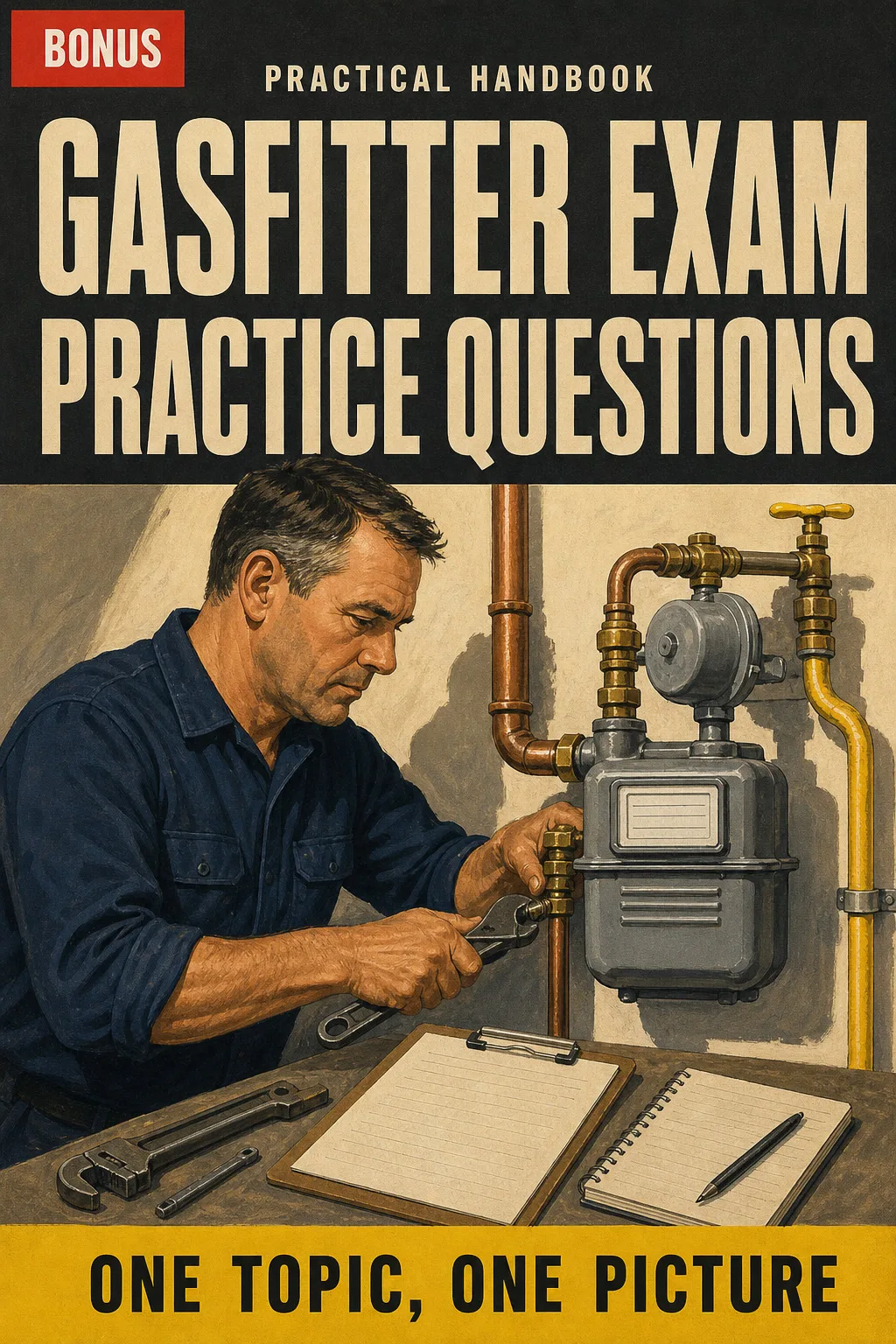
Gasfitter Exam Practice Questions

BONUS 1: «Gasfitter Exam Practice Questions»

Value on its own: US$ 17.90

Exam-style questions on every chapter with the answer explained, so you find your weak spots before the exam does.

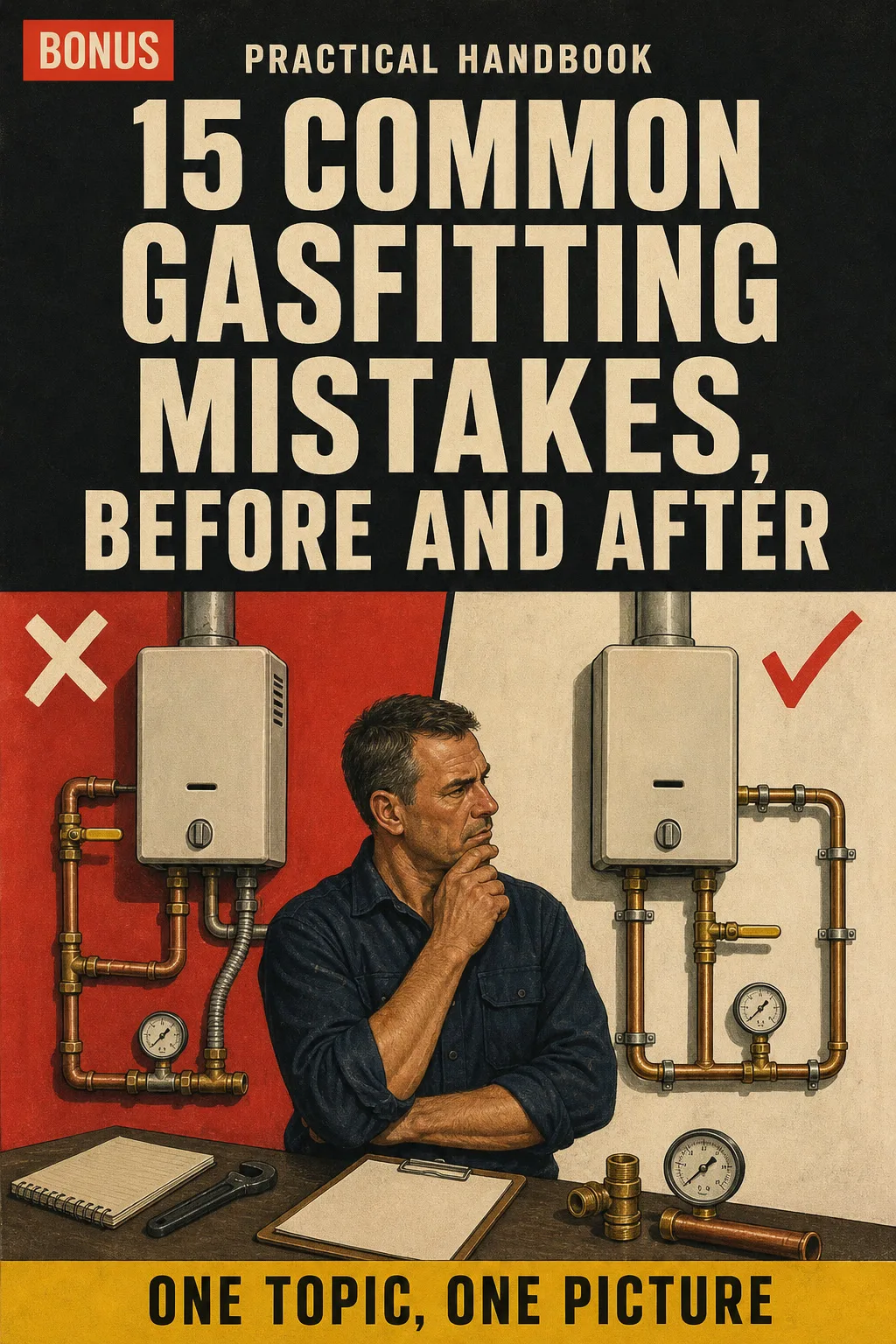
15 Common Gasfitting Mistakes, Before and After

BONUS 2: «15 Common Gasfitting Mistakes, Before and After»

Value on its own: US$ 14.90

The most frequent errors in pipe sizing, testing, flues and ventilation drawn side by side with the correct version, ready for a quick revision the night before.

NZ Gasfitter Exam Illustrated with 2 Free Books

  • NZ Gasfitter Exam Illustrated: 68 illustrated pagesUS$ 63
  • BONUS 1: Gasfitter Exam Practice QuestionsUS$ 17.90
  • BONUS 2: 15 Common Gasfitting Mistakes, Before and AfterUS$ 14.90
  • High-resolution PDF to printIncluded
Total value US$ 95.80
YOUR PRICE:
US$ 27
You save US$ 68.80
YES, I WANT NZ GASFITTER EXAM ILLUSTRATED FOR US$ 27

📄 This is a digital PDF book sent to your email: nothing is printed or shipped.

Secure purchaseEncrypted payment30-day guarantee

PDF by email: We email you NZ Gasfitter Exam Illustrated as a PDF, together with the two free books. It's a single payment: no installments, no extra charges.

Who This Book Is For

You're working under supervision

You're working under supervision

You do the work every day. The book puts the reason behind each step on one page, so the theory finally matches what you do on site.

Your registration exam is booked

Your registration exam is booked

Revise one topic a night, always in the same order, and walk in knowing where pipe sizing, testing, flues and ventilation sit.

You're going for Certifying Gasfitter

You're going for Certifying Gasfitter

The certification pages and the diagram sheet walkthrough show you how to read a drawn installation and check it step by step.

Everything You Get Today

US$ 95.80US$ 27
YES, I WANT NZ GASFITTER EXAM ILLUSTRATED FOR US$ 27

📄 This is a digital PDF book sent to your email: nothing is printed or shipped.

30DAYS
GUARANTEE

30-Day Guarantee

Try NZ Gasfitter Exam Illustrated for 30 days, bonus books included.

We refund everything if the file won't open, if the book isn't what you see here, if you were charged twice or if the email doesn't arrive. Just email us.

You pay once. No subscriptions.

Frequently Asked Questions

Is it for me if I already do gas work every day?

Yes. It isn't a beginner's book: it goes straight to what the exams ask and how it's done on site. It also suits gasfitters trained overseas who need the New Zealand rules.

Where does the content come from?

It's written for New Zealand: AS/NZS 5601.1 as used here, the Gas (Safety and Measurement) Regulations 2010, the Plumbers, Gasfitters, and Drainlayers Act 2006 and the Board's published exam prescriptions, all in metric units. It isn't an Australian or UK book with a new cover. Always check against the current edition.

Is it official material?

No. It's an independent study book, not affiliated with or endorsed by the Plumbers, Gasfitters and Drainlayers Board, WorkSafe NZ or Standards New Zealand, and it doesn't reproduce text or tables from the Standard. It doesn't give you a certificate and doesn't count towards your registration: it helps you revise for the exam.

Does it replace my training or the Standard?

No. It explains the topics with drawings to help you revise. Your training, supervised work and the current Standard still come first.

Are the practice questions the ones in the exam?

No. They're written for this book in exam style, to help you find your weak spots. They aren't official exam questions.

When and how do I get it?

As a PDF by email, sent to the address you enter at checkout. The 2 bonus books come the same way.

Do I have to pay every month?

No. It's a one-off payment, with no subscription.

Can I have it on paper?

Yes. The PDF prints well on A4, so you can keep a copy in the van.

How does the refund work?

You have 30 days. We refund everything if the file won't open, if the book isn't what you see on this page, if you were charged twice or if the email doesn't arrive: just email us.

Before You Close This Page

No more rereading the Standard with nothing sticking.

The whole installation, service pipe to appliance, drawn and done.

You walk into the exam knowing where everything is.

Drawings make studying faster.

The book is right below.

One-time payment: US$ 27 · Guarantee: 30 days · PDF by email

YES, I WANT NZ GASFITTER EXAM ILLUSTRATED FOR US$ 27

📄 This is a digital PDF book sent to your email: nothing is printed or shipped.